AI for Robotics embodies the convergence of intelligence and movement—where algorithms process information, sensors detect the environment, and machines execute actions with intent. It marks the vanguard where data translates into physical capability, fueling the evolution of autonomous systems, industrial robotics, and smart machinery.
Through instructor-led live training sessions, participants discover how artificial intelligence redefines robotics as adaptive, self-improving systems. Via practical exercises, they delve into perceptual models, path planning, reinforcement learning, and AI-based control frameworks that equip machines with responses akin to human agility.
Remote learners engage in a dynamic setting that replicates the rhythm of real-world laboratories. Guided step-by-step through live demonstrations and collaborative coding on an interactive remote desktop, every session becomes a joint exploration of logic and motion, transcending the traditional one-way lecture format.
For groups that favor collaborative development and testing, onsite live training in Transylvania—conducted at client sites or within NobleProg corporate training centers—turns learning into active experimentation. This approach brings together robotics, code, and creativity in a practical environment where theoretical concepts manifest physically.
Also referred to as Robotics AI or Intelligent Robotics, our training programs assist professionals in bridging the gap between software and mechanics—developing systems capable of sensing, deciding, and acting with growing autonomy and precision.
NobleProg — Your Local Training Provider
Brasov, Calea Bucuresti Street
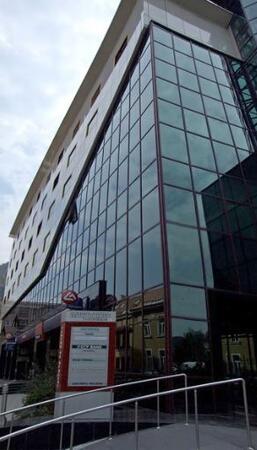
NobleProg Brasov, 13 Calea Bucuresti Street Sacele, Brasov, romania, 505600
The hotel is situated at the city entrance, being the best conference and training location in Brasov. Three conference rooms can accommodate up to 170 guests and can be modified for the company needs. These training rooms are equipped with the all necessities of a good conference or training.
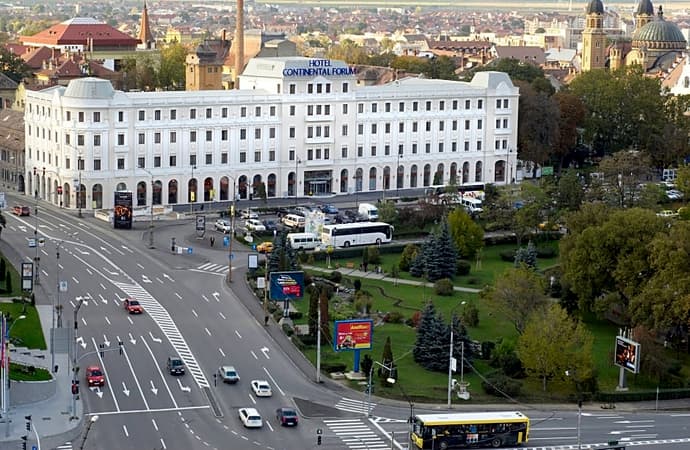
Salile de training sunt situate central în Sibiu, pe principalul bulevard. Clădirea hotelului care le gazduieste este de factură clasicistă si reprezinta un punct de referinta arhitecturala a orasului.
Turnul Sfatului, Galeria de Arta Contemporana, sau parcurile Corneliu Coposu si Astra se află în imediata apropiere.
Pentru a ajunge aici de la gara, puteti merge pe jos 20min sau cu autobuzul 5 circa 10min
Locuri de parcare găsiți în parcarea supravegheata, sau pe străzile alăturate.
Cluj-Napoca, Pitești Street
NobleProg Cluj-Napoca, Strada Pitești 19, Cluj-Napoca, romania, 400124
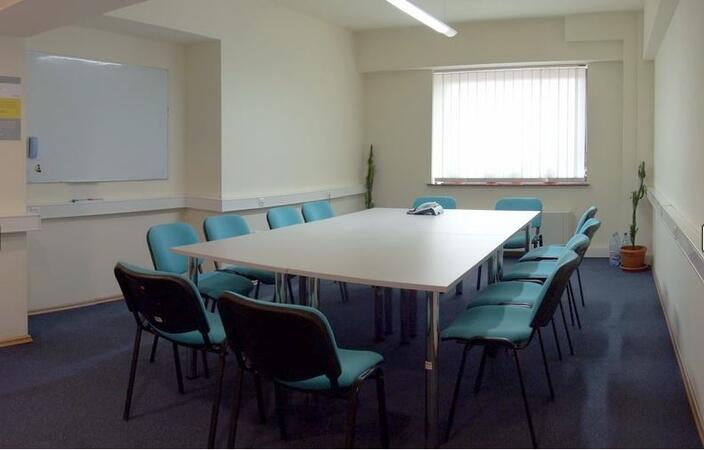
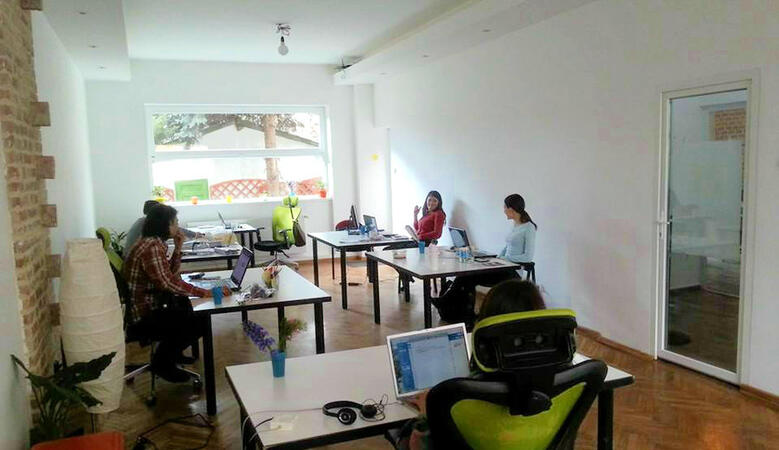
ClujHUB has more rooms for events and training sessions, which can host from 4 to 80 people. These areas can be setup up to fit the companies need. The location is great, 10 minutes walk from the historical city center.
Practical Rapid Prototyping for Robotics with ROS 2 & Docker is a hands-on course designed to help developers build, test, and deploy robotic applications efficiently. Participants will learn how to containerize robotics environments, integrate ROS 2 packages, and prototype modular robotic systems using Docker for reproducibility and scalability. The course emphasizes agility, version control, and collaboration practices suitable for early-stage development and innovation teams.
This instructor-led, live training (online or onsite) is aimed at beginner-level to intermediate-level participants who wish to accelerate robotics development workflows using ROS 2 and Docker.
By the end of this training, participants will be able to:
Set up a ROS 2 development environment within Docker containers.
Develop and test robotic prototypes in modular, reproducible setups.
Use simulation tools to validate system behavior before hardware deployment.
Collaborate effectively using containerized robotics projects.
Apply continuous integration and deployment concepts in robotics pipelines.
Format of the Course
Interactive lectures and demonstrations.
Hands-on exercises with ROS 2 and Docker environments.
Mini-projects focused on real-world robotic applications.
Course Customization Options
To request a customized training for this course, please contact us to arrange.
Human-Robot Interaction (HRI): Voice, Gesture & Collaborative Control is a practical course aimed at introducing participants to the design and implementation of intuitive interfaces for human–robot communication. This training blends theoretical concepts, design principles, and programming practice to help build natural and responsive interaction systems using speech, gesture, and shared control techniques. Participants will learn how to integrate perception modules, develop multimodal input systems, and design robots that can safely collaborate with humans.
This instructor-led, live training (available online or onsite) is targeted at beginner to intermediate-level participants who wish to design and implement human–robot interaction systems that improve usability, safety, and overall user experience.
Upon completion of this training, participants will be able to:
Grasp the foundational concepts and design principles of human–robot interaction.
Create voice-based control and response mechanisms for robots.
Implement gesture recognition using computer vision techniques.
Design collaborative control systems that enable safe and shared autonomy.
Evaluate HRI systems based on usability, safety, and human factors.
Course Format
Interactive lectures and demonstrations.
Practical coding and design exercises.
Hands-on experiments in simulation or real robotic environments.
Customization Options
To request a customized version of this course, please contact us to arrange.
Industrial Robotics Automation: ROS-PLC Integration & Digital Twins is a practical, hands-on course designed to bridge the gap between industrial automation and modern robotics frameworks. Participants will learn how to integrate ROS-based robotic systems with PLCs for synchronized operations, while exploring digital twin environments to simulate, monitor, and optimize production processes. The course places a strong emphasis on interoperability, real-time control, and predictive analysis using digital replicas of physical systems.
Delivered as instructor-led live training (available online or onsite), this program targets intermediate-level professionals eager to develop practical skills in connecting ROS-controlled robots with PLC environments and implementing digital twins for automation and manufacturing optimization.
Upon completion of this training, participants will be able to:
Grasp the communication protocols used between ROS and PLC systems.
Execute real-time data exchange between robots and industrial controllers.
Create digital twins for monitoring, testing, and simulating processes.
Integrate sensors, actuators, and robotic manipulators into industrial workflows.
Design and validate industrial automation systems using hybrid simulation environments.
Course Format
Interactive lectures and architecture walkthroughs.
Hands-on exercises focusing on integrating ROS and PLC systems.
Implementation of simulation and digital twin projects.
Course Customization Options
For customized training requests for this course, please contact us to make arrangements.
Robotic Manipulation and Grasping Using Deep Learning is an advanced program that connects robotic control with contemporary machine learning methods. Participants will investigate how deep learning can improve perception, motion planning, and dexterous grasping capabilities within robotic systems. Through theoretical instruction, simulation, and practical coding sessions, the course leads learners from perception-based control towards end-to-end policy learning for manipulation tasks.
This instructor-led, live training (available online or on-site) targets advanced professionals seeking to apply deep learning techniques to achieve intelligent, adaptable, and precise robotic manipulation.
Upon completion of this training, participants will be able to:
Build perception models for object recognition and pose estimation.
Train neural networks for grasp detection and motion planning.
Integrate deep learning modules with robotic controllers using ROS 2.
Simulate and evaluate grasping and manipulation strategies in virtual environments.
Deploy and optimize learned models on actual or simulated robotic arms.
Course Format
Expert-led lectures and in-depth algorithmic analysis.
Practical coding and simulation exercises.
Project-based implementation and testing.
Customization Options
To request a customized version of this course, please contact us to make arrangements.
The 'Multi-Robot Systems and Swarm Intelligence' advanced training course delves into the design, coordination, and control of robotic teams, drawing inspiration from biological swarm behaviors. Participants will acquire the skills to model interactions, implement distributed decision-making processes, and optimize collaboration among multiple agents. By blending theoretical knowledge with practical simulation exercises, the course prepares learners for real-world applications in logistics, defense, search and rescue operations, and autonomous exploration.
This instructor-led live training, available online or onsite, is designed for advanced-level professionals aiming to design, simulate, and deploy multi-robot and swarm-based systems using open-source frameworks and algorithms.
Upon completion of this training, participants will be able to:
Grasp the principles and dynamics of swarm intelligence and cooperative robotics.
Design communication and coordination strategies tailored for multi-robot systems.
Implement distributed decision-making and consensus algorithms.
Simulate collective behaviors, including formation control, flocking, and coverage.
Apply swarm-based techniques to real-world scenarios and optimization challenges.
Format of the Course
Advanced lectures featuring deep dives into algorithms.
Hands-on coding and simulation exercises using ROS 2 and Gazebo.
A collaborative project focused on applying swarm intelligence principles.
Course Customization Options
To request a customized training session for this course, please contact us to make arrangements.
TinyML is a framework for deploying machine learning models on low-power microcontrollers and embedded platforms used in robotics and autonomous systems.
This instructor-led, live training (online or onsite) is aimed at advanced-level professionals who wish to integrate TinyML-based perception and decision-making capabilities into autonomous robots, drones, and intelligent control systems.
Upon finishing this course, participants will be able to:
Design optimized TinyML models for robotics applications.
Implement on-device perception pipelines for real-time autonomy.
Integrate TinyML into existing robotic control frameworks.
Deploy and test lightweight AI models on embedded hardware platforms.
Format of the Course
Technical lectures combined with interactive discussions.
Hands-on labs focusing on embedded robotics tasks.
Safe & Explainable Robotics is an extensive training program centered on the safety, verification, and ethical governance of robotic systems. The course connects theoretical concepts with practical application by examining safety case methodologies, hazard analysis, and explainable AI techniques that render robotic decision-making transparent and reliable. Participants will acquire skills to ensure regulatory compliance, verify system behaviors, and document safety assurance in accordance with international standards.
This live, instructor-led training (available online or on-site) targets intermediate-level professionals seeking to apply verification, validation, and explainability principles to guarantee the safe and ethical deployment of robotic systems.
Upon completion of this training, participants will be capable of:
Creating and documenting safety cases for robotic and autonomous systems.
Implementing verification and validation techniques within simulation environments.
Gaining insight into explainable AI frameworks utilized for robotics decision-making.
Integrating safety and ethical principles into system design and operational workflows.
Effectively communicating safety and transparency requirements to stakeholders.
Format of the Course
Interactive lectures and group discussions.
Practical simulation and safety analysis exercises.
Analysis of case studies derived from real-world robotics applications.
Course Customization Options
For those interested in a customized training session for this course, please reach out to us to make arrangements.
Edge AI allows artificial intelligence models to execute directly on embedded or resource-limited devices, thereby lowering latency and power usage while boosting autonomy and privacy in robotic applications.
This instructor-led, live training (available online or onsite) is designed for intermediate-level embedded developers and robotics engineers who aim to implement machine learning inference and optimization techniques directly on robotic hardware using TinyML and edge AI frameworks.
Upon completing this training, participants will be capable of:
Grasping the core concepts of TinyML and edge AI in robotics.
Converting and deploying AI models for on-device inference.
Optimizing models for speed, size, and energy efficiency.
Integrating edge AI systems into robotic control architectures.
Evaluating performance and accuracy in real-world scenarios.
Course Format
Interactive lectures and discussions.
Hands-on exercises utilizing TinyML and edge AI toolchains.
Practical work on embedded and robotic hardware platforms.
Customization Options
For customized training requests, please reach out to us to arrange.
This instructor-led, live training in Transylvania (online or onsite) is aimed at intermediate-level participants who wish to explore the role of collaborative robots (cobots) and other human-centric AI systems in modern workplaces.
By the end of this training, participants will be able to:
Understand the principles of Human-Centric Physical AI and its applications.
Explore the role of collaborative robots in enhancing workplace productivity.
Identify and address challenges in human-machine interactions.
Design workflows that optimize collaboration between humans and AI-driven systems.
Promote a culture of innovation and adaptability in AI-integrated workplaces.
Reinforcement learning (RL) is a machine learning paradigm where agents learn to make decisions by interacting with an environment. In robotics, RL enables autonomous systems to develop adaptive control and decision-making capabilities through experience and feedback.
This instructor-led, live training (online or onsite) is aimed at advanced-level machine learning engineers, robotics researchers, and developers who wish to design, implement, and deploy reinforcement learning algorithms in robotic applications.
By the end of this training, participants will be able to:
Understand the principles and mathematics of reinforcement learning.
Implement RL algorithms such as Q-learning, DDPG, and PPO.
Integrate RL with robotic simulation environments using OpenAI Gym and ROS 2.
Train robots to perform complex tasks autonomously through trial and error.
Optimize training performance using deep learning frameworks like PyTorch.
Format of the Course
Interactive lecture and discussion.
Hands-on implementation using Python, PyTorch, and OpenAI Gym.
Practical exercises in simulated or physical robotic environments.
Course Customization Options
To request a customized training for this course, please contact us to arrange.
OpenCV is an open-source computer vision library that enables real-time image processing, while deep learning frameworks such as TensorFlow provide the tools for intelligent perception and decision-making in robotic systems.
This instructor-led, live training (online or onsite) is aimed at intermediate-level robotics engineers, computer vision practitioners, and machine learning engineers who wish to apply computer vision and deep learning techniques for robotic perception and autonomy.
By the end of this training, participants will be able to:
Implement computer vision pipelines using OpenCV.
Integrate deep learning models for object detection and recognition.
Use vision-based data for robotic control and navigation.
Combine classical vision algorithms with deep neural networks.
Deploy computer vision systems on embedded and robotic platforms.
Format of the Course
Interactive lecture and discussion.
Hands-on practice using OpenCV and TensorFlow.
Live-lab implementation on simulated or physical robotic systems.
Course Customization Options
To request a customized training for this course, please contact us to arrange.
This instructor-led training in Transylvania (online or onsite) is designed for advanced robotics engineers and AI researchers looking to leverage Multimodal AI. The goal is to integrate diverse sensory data to build more autonomous and efficient robots that can see, hear, and touch.
Upon completion, participants will be able to:
Implement multimodal sensing in robotic systems.
Develop AI algorithms for sensor fusion and decision-making.
Create robots that can perform complex tasks in dynamic environments.
Address challenges in real-time data processing and actuation.
Smart Robotics involves combining artificial intelligence with robotic systems to enhance perception, decision-making, and autonomous control.
This guided live training (available online or on-site) is designed for advanced robotics engineers, systems integrators, and automation leads who want to apply AI-driven perception, planning, and control in smart manufacturing settings.
By the end of this training, participants will be able to:
Understand and apply AI techniques for robotic perception and sensor fusion.
Develop motion planning algorithms for collaborative and industrial robots.
Deploy learning-based control strategies for real-time decision making.
Integrate intelligent robotic systems into smart factory workflows.
Format of the Course
Interactive lecture and discussion.
Lots of exercises and practice.
Hands-on implementation in a live-lab environment.
Course Customization Options
To request a customized training for this course, please contact us to arrange.
ROS 2 (Robot Operating System 2) is an open-source framework designed to facilitate the development of complex and scalable robotic applications.
This instructor-led, live training (available online or onsite) is tailored for intermediate-level robotics engineers and developers who aim to implement autonomous navigation and SLAM (Simultaneous Localization and Mapping) using ROS 2.
By the conclusion of this training, participants will be able to:
Configure and set up ROS 2 for autonomous navigation applications.
Deploy SLAM algorithms for mapping and localization tasks.
Integrate sensors, such as LiDAR and cameras, with ROS 2.
Simulate and test autonomous navigation capabilities within Gazebo.
Deploy navigation stacks onto physical robots.
Course Format
Interactive lectures and discussions.
Hands-on practice utilizing ROS 2 tools and simulation environments.
Live laboratory implementation and testing on virtual or physical robots.
Customization Options
To request customized training for this course, please contact us to arrange details.
This instructor-led live training in Transylvania (online or onsite) is designed for intermediate-level participants looking to enhance their skills in designing, programming, and deploying intelligent robotic systems for automation and beyond.
Upon completing this training, participants will be able to:
Grasp the core principles of Physical AI and its applications in robotics and automation.
Design and program intelligent robotic systems tailored for dynamic environments.
Implement AI models to enable autonomous decision-making in robots.
Utilize simulation tools for testing and optimizing robotic performance.
Tackle challenges such as sensor fusion, real-time data processing, and energy efficiency.
Artificial Intelligence (AI) for Robotics integrates machine learning, control systems, and sensor fusion to develop intelligent machines that can perceive, reason, and act autonomously. Leveraging contemporary tools such as ROS 2, TensorFlow, and OpenCV, engineers are now equipped to design robots capable of navigating, planning, and interacting with real-world environments in an intelligent manner.
This instructor-led, live training (available online or onsite) is designed for intermediate-level engineers seeking to develop, train, and deploy AI-driven robotic systems using up-to-date open-source technologies and frameworks.
Upon completion of this training, participants will be able to:
Utilize Python and ROS 2 to construct and simulate robotic behaviors.
Implement Kalman and Particle Filters for localization and tracking.
Apply computer vision techniques using OpenCV for perception and object detection.
Employ TensorFlow for motion prediction and learning-based control.
Integrate SLAM (Simultaneous Localization and Mapping) for autonomous navigation.
Develop reinforcement learning models to enhance robotic decision-making.
Format of the Course
Interactive lecture and discussion.
Hands-on implementation using ROS 2 and Python.
Practical exercises with simulated and real robotic environments.
Course Customization Options
To request a customized training for this course, please contact us to arrange.
A bot, or chatbot, functions like a digital assistant designed to automate user interactions across various messaging platforms, enabling quicker task completion without requiring direct human intervention.
In this instructor-led live training, participants will learn how to begin developing bots by walking through the creation of sample chatbots using dedicated bot development tools and frameworks.
Upon completing this training, participants will be able to:
Understand the various uses and applications of bots
Grasp the complete bot development lifecycle
Explore the diverse tools and platforms used in bot construction
Construct a sample chatbot for Facebook Messenger
Build a sample chatbot utilizing the Microsoft Bot Framework
Audience
Developers interested in creating their own bots
Course Format
A blend of lectures, discussions, exercises, and extensive hands-on practice
This instructor-led live training in Transylvania (online or onsite) is designed for engineers who want to explore the application of artificial intelligence to mechatronic systems.
By the end of this training, participants will be able to:
Gain a broad overview of artificial intelligence, machine learning, and computational intelligence.
Understand the core concepts of neural networks and various learning methods.
Select the most effective artificial intelligence approaches for solving real-world problems.
Implement AI applications in the field of mechatronic engineering.
Read more...
Last Updated:
Testimonials (2)
Supply of the materials (virtual machine) to get straight into the excersises, and the explanation of the Ros2 core. Why things work a certain way.
Arjan Bakema
Course - Autonomous Navigation & SLAM with ROS 2
its knowledge and utilization of AI for Robotics in the Future.
Ryle - PHILIPPINE MILITARY ACADEMY
Course - Artificial Intelligence (AI) for Robotics
Online Robotics AI training in Transylvania, Intelligent Robotics training courses in Transylvania, Weekend Intelligent Robotics courses in Transylvania, Evening AI for Robotics training in Transylvania, Intelligent Robotics instructor-led in Transylvania, Intelligent Robotics on-site in Transylvania, Intelligent Robotics instructor-led in Transylvania, Online Robotics AI training in Transylvania, Intelligent Robotics one on one training in Transylvania, Robotics AI coaching in Transylvania, AI for Robotics private courses in Transylvania, Evening AI for Robotics courses in Transylvania, Robotics AI instructor in Transylvania, Intelligent Robotics classes in Transylvania, AI for Robotics trainer in Transylvania, Intelligent Robotics boot camp in Transylvania, Weekend Robotics AI training in Transylvania